WHICH HEADSET SHOULD I BUY THEM?
‘Which VR headset should I buy for Christmas?’
As we’re in the VR industry customers regularly ask us to recommend VR headsets and accessories. There is no one size fits all answer, but here are some thoughts that might help you find the headset that would suit the person you are buying for.
Let’s start with a bullet point summary and then go into detail.
(For any terms in italics I’ve included a jargon busting glossary at the end!)
Summary
The Meta Quest 3 is probably the best all round headset (as at end of 2025). It’s probably the one to buy as a gift for most new VR users or those looking to upgrade.
A huge app store (over 13,000 apps and always rising) + optional Horizon + subscription service for cheap access to new and past games.
Runs on the current leading processor (Qualcomm Snapdragon XR2 Gen 2).
Great optics, using “Pancake” lenses and 2064 x 2208 pixels per eye.
An immersive 110 x 96 degree field of view.
Good colour pass through cameras and a depth sensor, so you can see the outside world while wearing the headset. Menus and virtual desktops float in the air in your room in mixed reality. The library of mixed reality games and applications is growing rapidly.
Can be connected to a gaming PC to access a huge back catalogue of higher spec games.
If on a tighter budget the Meta Quest 3s is definitely worth a look.
Access to the same great App Store as the Meta Quest 3.
Uses the same powerful SnapDragon XR2 Gen 2 processor as the Meta Quest 3.
The optics aren’t as good as the Meta Quest 3 using the inferior Fresnel lenses and a lower resolution of 1832 x 1920 per eye - same as the older Quest 2.
At 96 x 90 degrees, the Meta Quest 3s shares the same field of view as the Quest 2.
Good colour pass through, but without a depth sensor and with the Fresnel lenses, so it’s not as suited to mixed reality applications as its big brother.
Can be connected to a gaming PC to access a huge back catalogue of higher spec games.
Costs as little as £289 for the 128GB version (£379 for 256GB), compared with the Quest 3 (£470 for 512GB).
The Pico 4 is a solid option which trades processor power for better optics. It’s the one to opt for if buying a headset for a child due to its lightweight and plush feel.
A step behind the Quest 3 and 3s, with the same processor as the Quest 2 (Snapdragon XR2 Gen 1). But better optics than the Quest 2 adn 3s, using the superior pancake lenses and a resolution of 2160 x 2160 per eye.
An excellent 104 x 104 field of view, better than the Quest 3.
Great for PCVR: It’s lightweight and plush design makes it great for long-term wear. So, when connected to a gaming PC for PCVR, the PC does the processing work, making for an excellent running, great looking game.
Limited standalone store in comparison to Meta (~350 versus Meta’s 13,000 +). This is why it’s such a good headset for PCVR. It may not have a large selection of titles on the headset, you can access the whole PCVR market place on Steam or elsewhere.
Cheap (128GB for £249).
A PlayStation VR2 is a good choice for gamers, but only if they have and use their PS5 already.
Great optics at 2000x2040 resolution per eye.
Smaller field of view than the Quest 3, 89 x 93 degress.
Uses fresnel lenses.
OLED screen helps everything ‘pop’ that bit extra, the darks are extra dark and the colours are vibrant.
The PSVR2 has eye tracking like the Apple Vision Pro.
Playstation VR’s store weaker than Meta’s.
Connects directly into the PlayStation 5 and uses it as its processor, making for great graphics and smooth running gameplay.
This also makes it a great candidate for PCVR as it’s a great screen, it just needs the PC to do the processing work.
It’s only worth buying for someone who has, and regularly uses, a PS5.
Costs £399 (it has no memory as it relies on the PS5).
Requires a wired connection for both PlayStation VR and PCVR.
If you’ve got an unlimited budget and want something for the Apple fan who has everything the Apple Vision Pro is a great headset if you like working on many monitors.
The best optics on this list, with a resolution of 3660 x 3200 pixels in each eye.
Uses special ‘pancake optics’ lenses to make the headset smaller and lighter.
Infrared technology allows for apps/icons to be selected with eye tracking.
It’s not for gaming. This is a sit still and look around headset. It’s purpose is to be either a virtual office or cinema.
The headset is custom fitted to the user’s head, so no surprise gifts with this one.
It’s awkward to share, a perfect fit on one person is imperfect on nearly everyone else.
Weak battery life (2-2 and a half hours).
For more ‘on the go’ day-to-day use, the Meta Ray-Ban glasses are worth a look. However, they’re not the best gift choice, it’s best if people pick their own frames.
Live AI translation.
Live subtitling.
Hands-free AI search.
Great quality photo and video (3k ultra HD for Gen 2 and 1080p for Gen 1).
Neural wristband set to launch in UK in 2026.
Can be clunky to wear and look unnaturally large.
Meta Quest 3
The Meta Quest 3, is a significant upgrade from the Meta Quest 2. Changing to pancake lenses over Fresnel , with a resolution of 2064x2208 per eye and a maximum refresh rate of 120 Hz, the headset can show a much better image quality and smoother motion.
The headset can run games well, both from the extensive Meta Store and through PCVR, hooking your headset up to your PC and running PC games through your headset.
The Quest 3’s main distinction from other headsets is its mixed reality passthrough. It helps create new levels of immersion, especially when paired with the headset’s hand tracking. This helps in making the headset so versatile, the clarity of the Quest 3’s passthrough makes it possible to use it like a virtual office. Menus and virtual desktops float in the air in your room in mixed reality, meaning you can interact with things as you need to, for example reading off your phone.
The high resolution display (2064x2208 per eye) is what makes monitor replacement possible. Using virtual monitors but in mixed reality means the headset a more sociable tool as you can use it without being isolated. No more putting on a headset and suddenly it’s like you’re no longer in the room.
This makes it a good ‘all-round’ headset — not specialised for one thing, but capable of doing lots of things well.
The cons of the Quest 3 come when you look at its battery life and the head strap of the headset. These are common issues with all Meta headsets. The head strap feels frail and uncomfortable and the battery life isn’t long (2-3 hours). Both of these issues can be resolved by buying a head strap and rechargeable batteries that sit on the back of the headset.
However, that’s additional costs on top of the £470 headset, so the ‘true’ price ends up higher.
Main Pro: Its versatility and ‘swiss army knife’ nature. This is due to: full colour, mixed reality passthrough, great hand tracking, huge game library, good PCVR and it’s still receiving regular updates and new features.
Main Con: Expensive and requires additional purchases for best experience.
Overall: The best choice as a gift for a VR headset this Christmas to give someone a comprehensive, rounded VR experience.
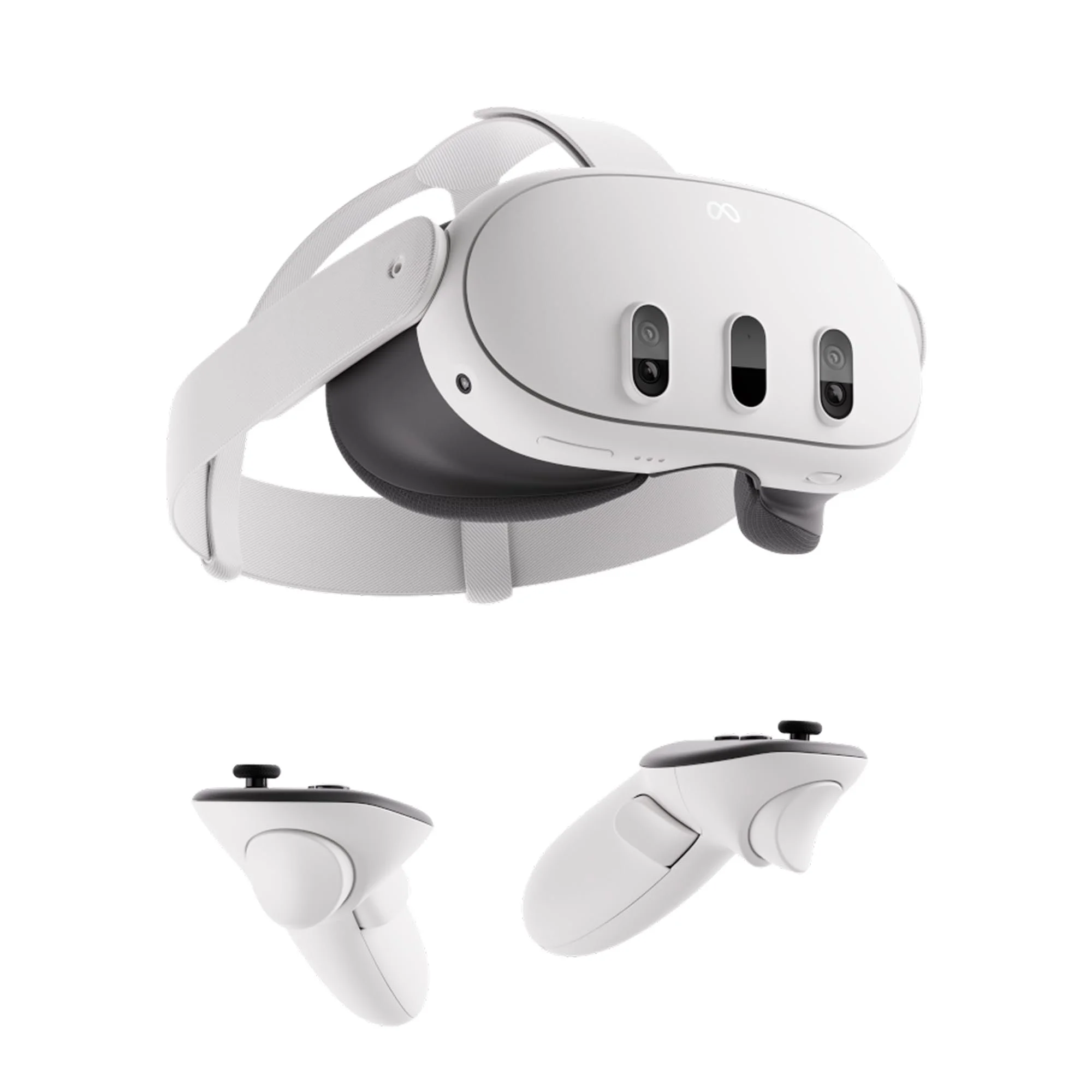
An image of the Meta Quest 3.
Meta Quest 3s
The Meta Quest 3s is essentially a lighter, simpler, lower featured, cheaper version of the Meta Quest 3 but with the very same powerful chip!
The Quest 3s graphics aren’t as good as the Quest 3 because it uses fresnel lenses instead of pancake lenses, and has a lower resolution of 1832x1920 per eye. The lower resolution means the Quest 3s isn’t viable as a virtual office. The Quest 3s has got full colour, mixed reality passthrough like the Quest 3 but no depth sensor so the mixed reality isn’t as useful as in the 3. Even though the graphics aren’t as sharp, you can still see your surroundings clearly. It just won’t be crisp enough for you to be able to read your phone with the headset on, which is why using it as an office is a challenge. There would be a lot of taking it off and putting on again.
The Quest 3s is designed to play VR games smoothly without costing as much as the Quest 3, costing £328, compared with the £470 Quest 3. It’s basically the “Quest 3 Lite”, same idea, lower quality lenses, lower price.
You still have access to most of what makes the Quest 3 good: hand tracking, colour passthrough, the Meta Quest library. However, the cheaper Fresnel lenses and lower resolution cost you in the graphics department. The Quest 3s also shares the same problems as other Meta headsets, with the frail, uncomfortable head strap and a short battery life. Again, both can be fixed by buying a better, more comfortable head strap and a rechargeable battery pack that attaches to the back, but these are extra costs.
Main Pro: Feels lighter and less bulky than the Quest 3. Low cost.
Main Con: Uses Fresnel lenses and lower resolution screens, which means the optics aren’t as sharp.
Overall: If you mainly want to play games, want something lighter, or want a cheaper option that still gives the Quest 3 experience, the Quest 3s is the best pick.
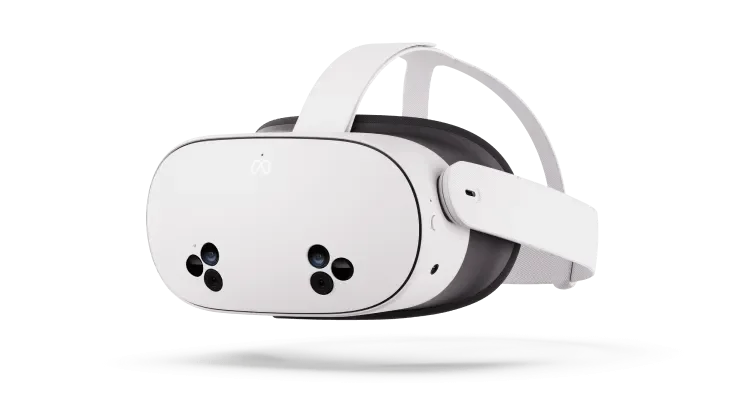
An image of the Quest 3s.
Pico 4
The Pico 4 is a great headset for a great price. It uses pancake lenses – same as the Meta Quest 3 - which means the picture inside the headset looks sharp and detailed. Resolution is 2160x2160 per eye. These give the Pico 4 graphics that are very similar to the more expensive Quest 3, while only costing £279.
The processor is the same as the Quest 2, so it’s not as powerful as the Quest 3 or the Quest 3s. It’s best thought of as a Quest 2 with better optics and comfort. The headset itself is lightweight and has soft, comfortable padding, making it easy to wear for long sessions.
The Pico 4’s store feels thin in comparison to the Meta Store. However, this is compensated by the fact that the Pico 4 REALLY shines when being used for PCVR. The lightweight design makes it comfortable to wear for long play sessions. So, while its built-in store isn’t great, and its onboard processing isn’t as strong as the Quest 3 or Quest 3s, the Pico 4 brings great optics to PCVR at a great price point. The Pico 4 shines in PCVR because it doesn’t need to rely on its processor. It can use the PC processor and have the superior graphics.
Main Pro: Fantastic value for PCVR due to pancake lenses and comfortable headset to wear for long play sessions, and the PC can compensate for the less powerful processor.
Main Con: The built-in app store isn’t as strong as Meta’s, and its processor is not as powerful as the Quest 3 or Quest 3s.
Overall: The Pico 4 is a great choice for children, especially as a Christmas gift. It’s comfortable for smaller heads, great for gaming, and good value for the quality it offers.
The Steam Index, HP Reverb G2, and Vive Focus 3 are some other great headsets for PCVR not on this list that deserved an honourable mention. However, if someone wanted one of these headsets, they would have already bought it for themselves.
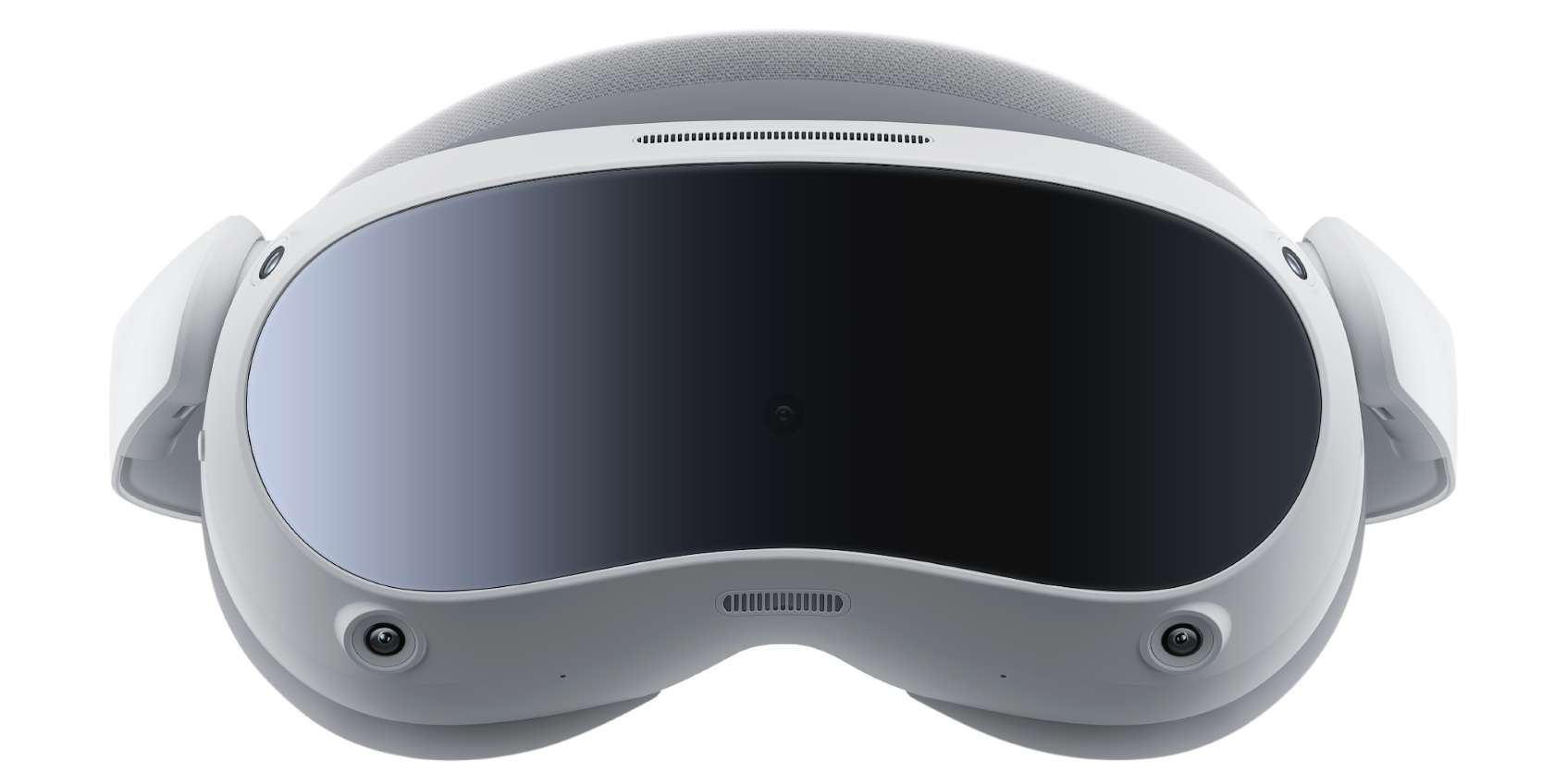
An image of the Pico 4.
PlayStation VR 2
The PlayStation VR2 is a powerful VR headset designed to work with the PlayStation 5. It has very sharp visuals thanks to its 4K OLED screen, 2000x2040 resolution per eye, and maximum refresh rate of 120Hz.
Retailing for £399.99, this headset is for gamers who prefer console, but will get great graphics due to the power of the headset. The main downside of the headset is that when using the headset, you need a wired connection from headset to Playstation console. This may become irritating to some in a world of largely wireless headsets. However, this wired connection is what helps the headset run so smoothly. The wired connection also means the headset doesn’t need to be charged.
The headset connecting directly into the PlayStation5 allows it to use the PS5 its processor, making for great graphics and smooth running gameplay. This also makes the PlayStation VR2 a great candidate for PCVR as it’s a great screen, it just needs the PC to do the processing work. However, you will need to buy a PSVR 2 PC adapter to plug the headset into the PC.
Main Pro: Great Graphics.
Main Con: Requires a wired connection.
Overall: This is a strong choice for someone who already owns and regularly uses a PlayStation 5.
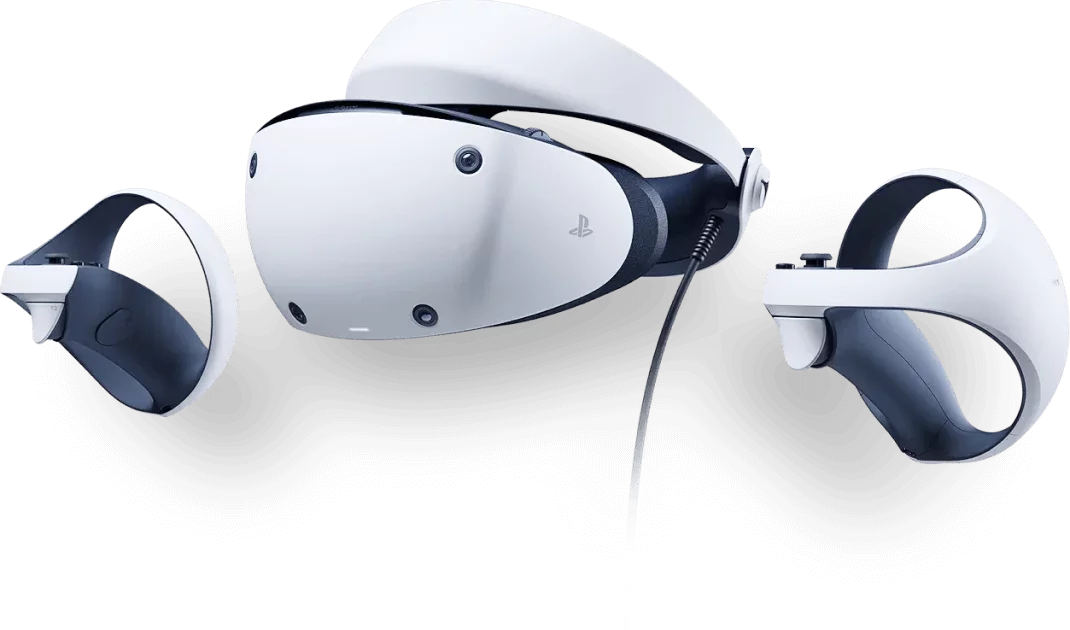
An image of the PlayStation VR2.
Apple Vision Pro
With pricing for the Apple Vision Pro starting at £3,199, this headset is incredible technology, but not one to be gifting people. With no controllers needed, the entire interface can be used with either hand or eye tracking. The Apple Vision Pro is designed to be used for watching screens or as a virtual office, with more pixels than a 4k tv in each eye. It provides incredibly clear graphics, but it’s price is it’s major downfall.
The Apple Vision Pro is custom fit to its owner’s head. This benefits one user and means it won’t easily fit anyone else. Most VR headsets can be adjusted and passed around for others to try. The Apple Vision Pro is much more personalised, so sharing it between friends and family is far less practical.
Main Pro: Excellent graphics.
Main Con: Starts at £3199.
Overall: This is designed for someone who wants to use it as a personal office, or entertainment centre every day. If you are going to buy it as a gift, it can’t be a surprise as it needs to be custom fitted.
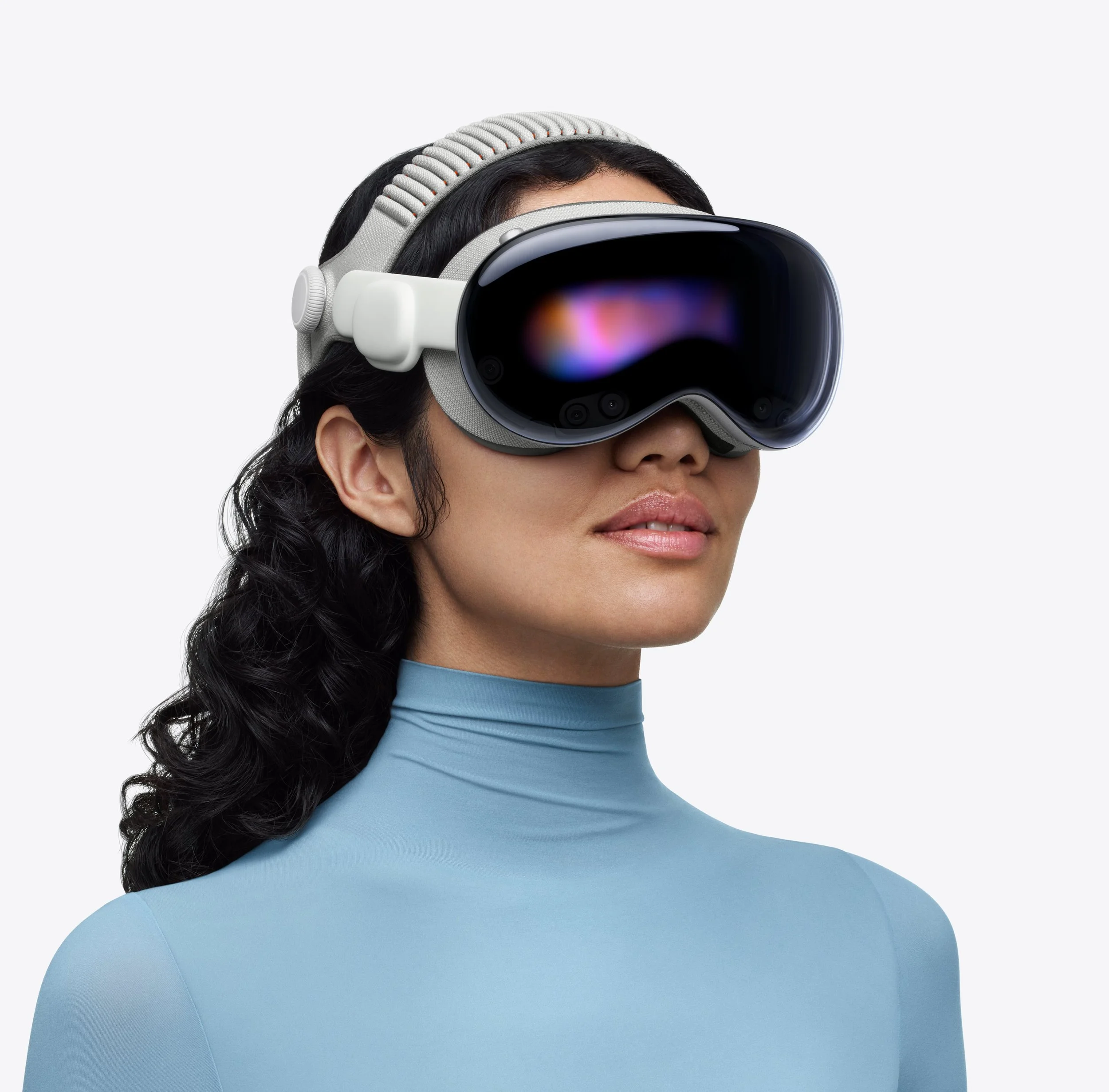
An image of the Apple Vision Pro.
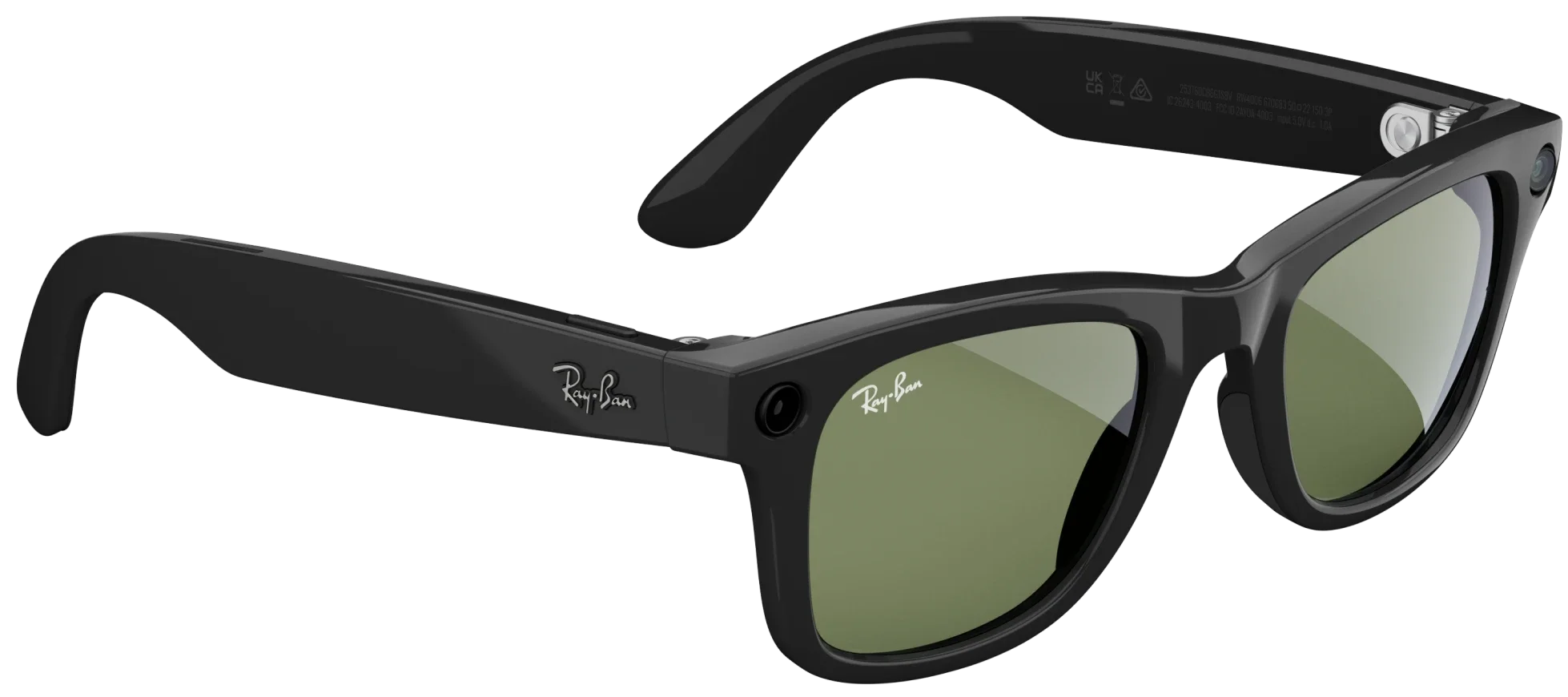
An image of the Meta Ray Ban Glasses.
Meta Ray-Ban Glasses
Slightly different than the rest of our list, the Meta Ray-Ban Glasses occupy a unique space in the market for those who are looking for photo and video documentation. With a user-friendly interface that allows social media apps and photos and videos to be in front of you at any moment, the glasses are essentially a phone on your face. However, they also have many other great quality of life features.
Using the Meta AI mobile app, you can understand or listen to speech in English, French, German, Portuguese, Italian or Spanish. Your conversation can be translated with the instant translation feature, making these a handy tool for people who love to travel. The glasses can also subtitle live conversations, which can be instantly translated to any of the previously mentioned languages, a helpful feature for the hard of hearing, or those who are having conversations in a second language.
The Meta Ray-Ban Glasses also provide hands free AI search, prompted by saying ‘Hey Meta'.
The glasses also have a Meta Neural Wristband however it is not yet available in the UK, with it likely being available early 2026.
However, the main caveat of these glasses is their bulkiness. They are substantially larger than your typical pair of glasses, and can look and feel clunky.
The price varies on which frames you get, ranging between £379-£459.
Main Pro: The quality of life they provide (hands-free AI search, live translation, social media and calling readily accessible, easy video and photography).
Main Con: The clunkiness of the frames.
Overall: A great tool, but something for someone to buy themselves, especially so they can choose the right frames for them.
Glossary:
Eye tracking: Small cameras and infrared LEDs inside the headset follow the user’s gaze, allowing the user to use gaze-based controls, and saving processing power through clever use of foveated rendering.
Hand tracking: The cameras monitoring your hands, allowing you to control environments and apps with natural gestures like pinching, pointing, or swiping, instead of physical controllers.
Fresnel lenses: Inferior to pancake lenses. Fresnel lenses don’t bend smoothly in one big curve like pancake lenses. This means light can’t bend in ways like a pancake lense can, causing glare and poorer image quality.
Pancake lenses: Due to the shape, they allow for smaller, more compact headsets. Pancake lenses can be thinner, lighter, and cause less distortion around the eye.
PCVR: (PC Virtual Reality) Using the power of a personal computer to run games and apps, sending the data to the VR headset, which then acts as a display. The added processing power of a PC really steps up the quality.
Resolution: The number of pixels a display can show horizontally and vertically. A higher resolution means more+smaller pixels, resulting in a sharper image.
Refresh rate: How many times a screen redraws an image per second, measured in Hertz (Hz).
OLED: (Organic Light-Emitting Diode) Each pixel produces its own light from organic compounds, allowing for more vibrant colours and better contrast compared to LED.
Field of View: The angular extent at which you can see the world.